
Gary Epoxy Flooring handles concrete floor repair in Gary, IN, serving surrounding cities including Lake Station, Griffith, Highland, Hobart and East Chicago. With 20+ years spent preparing and coating slabs, we treat repair as its own trade rather than a quick patch before the color goes on. A coating laid over a cracked, spalled or scaling floor carries every one of those defects into the finished surface.
Every job begins with a crack and spall map. We walk the slab, sound it for hollow areas, note old patches and coatings, and mark which cracks look stable and which look active. That map goes into the written proposal, so the repair scope is spelled out line by line rather than hidden in a single price.
We also tell owners when a slab is beyond repair. A floor that has heaved, settled in sections or broken into loose pieces needs partial or full replacement before any coating, and saying so up front costs far less than selling a floor system that cannot hold together.
Cracks in Garage, Basement and Shop Floors
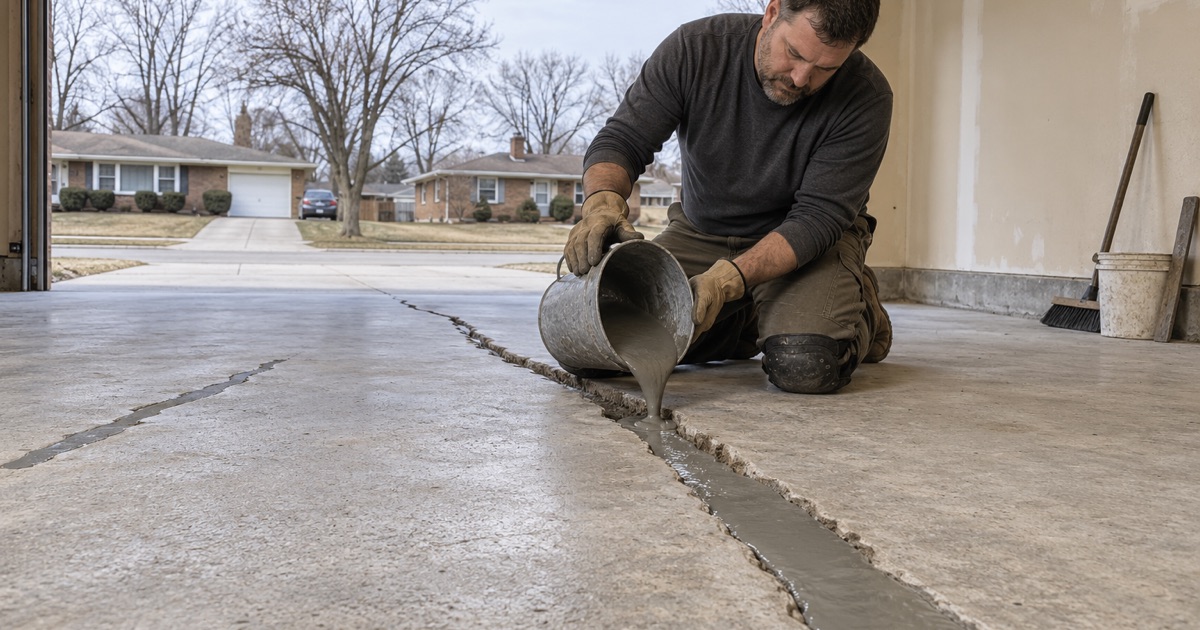
Hairline and Shrinkage Cracks
Almost every concrete slab cracks as it cures and shrinks, and fine, tight shrinkage cracks are not a structural concern. They still matter under a coating, because dirt and moisture collect in them and an unfilled crack can show through as a line in the finish.
We chase these cracks open with a diamond blade or crack chaser, vacuum them clean and fill them with a rigid epoxy or polyurea repair material. Once cured, the repair is ground flush with the surrounding slab so the coating goes over a smooth, continuous surface.
Active and Settlement Cracks
Cracks that are wide, offset from one side to the other, or that keep growing indicate the slab is still moving, often from settlement of soft soil or water beneath it. Filling an active crack with a rigid material simply moves the crack a few inches over.
For these, we discuss flexible joint treatments, monitoring, or addressing the cause before any coating. On some sandy and wet sites around the lake, the honest answer is section replacement, and we say so.
Cracks That Carry Water
A crack that is damp or weeps after rain tells us water is moving through the slab, which a floor repair cannot stop on its own. We point those out during the assessment, because sealing a wet crack from above does not stop water pressure underneath, and drainage or foundation work may need to come first.
Spalls, Pitting and Surface Damage
Spalled Concrete and Popouts
Spalls are chunks of concrete that have broken away from the surface, often at joints, edges or where heavy loads have been dropped. Popouts are small cone-shaped holes left when an aggregate particle near the surface breaks loose.
We saw-cut or grind spalled areas back to sound concrete, square the edges so the repair has something to hold, and rebuild them with a rigid patching material. Popouts and small holes are filled during the base coat or with a fast-setting filler.
Salt Scaling and Freeze-Thaw Damage
Garage floors and entries in Northwest Indiana take rock salt and calcium chloride brine from every car and pair of boots that comes in from winter roads. When that brine soaks into bare concrete and freezes, it breaks off thin layers in a pattern called scaling, leaving rough, flaking patches.
Minor scaling is ground away during preparation and the surface rebuilt with a resurfacer or the base coat of the coating system. Deep scaling may need a thin cementitious overlay to restore a sound surface before coating.
Pitted and Worn Floors
Old floors that have taken years of traffic, chemicals or steel wheels often show widespread pitting and exposed aggregate. A skim coat or self-leveling resurfacer restores a smooth, even surface, and it gives a decorative coating a consistent base to bond to.
Resurfacing is not a cure for a slab that is structurally failing. It suits sound concrete with a worn or damaged top, and before recommending it we sound the floor for hollow areas, check for active cracks and confirm the slab is stable enough that a thin new layer will stay bonded to it.
Joints, Edges and Transitions
Control Joint Repair
Control joints are saw cuts that let a slab crack in a straight line rather than randomly. In garages and warehouses, their edges chip under tires and wheels, especially forklifts and pallet jacks, and that damage spreads if left alone.
We rebuild chipped joint edges with a rigid repair mortar and either refill the joint with a semi-rigid filler or honor it through the coating, depending on how the floor will be used. In warehouses, filled joints help protect forklift wheels as well as the concrete.
Garage Aprons and Door Thresholds
The area just inside the garage door takes the most salt, water and tire traffic, and it is often the most damaged part of the slab. We repair spalls and scaling there, rebuild the edge where it meets the driveway, and make sure the transition is sloped so water drains out rather than pooling.
Floors Around Drains and Sumps
Floors around floor drains and sump pits often show cracking and erosion from years of water. We rebuild the concrete around each opening, restore the slope toward the drain and leave the area ready for a coating that meets the rim cleanly.
Preparing Repairs for Coating
Moisture and Repair Materials
Repair materials respond differently to moisture, and some fail when slab moisture is high. We test for moisture with ASTM F1869 or ASTM F2170 methods before choosing materials, and where readings run high, we select repair products and primers rated for those conditions.
Temperature matters as well. Resin-based repair materials cure slowly on a cold slab, so in unheated garages during winter we either warm the space, choose a product rated for cold conditions, or schedule the repair for milder weather rather than grinding a soft patch flush.
Grinding Repairs Flush
Every repair is ground flush with the slab after it cures, then the whole floor is ground to the profile the coating needs. That way the repaired areas and the original concrete look and bond the same once the coating goes down.
- 20+ Years Coating Concrete
- Written Moisture Testing
- Free Estimates