
Gary Epoxy Flooring installs flake epoxy floor systems in Gary, IN, serving surrounding cities including Lake Station, Griffith, Highland, Hobart and East Chicago. A flake floor, sometimes called a chip or broadcast floor, is the most popular coating we put in garages, and after 20+ years of coating concrete we understand why: it hides imperfections, adds texture, stands up to winter salt, and looks clean with very little effort.
The look is only part of what a flake floor does. A full broadcast of vinyl chips adds thickness and texture to the system, gives the topcoat more body to protect, and disguises the dust, tire marks and salt residue that a solid coating shows. Built properly, it is a working floor that happens to look good.
Our proposals for flake floors name the surface preparation method, the moisture test and the reading it must pass, the base coat and topcoat products, the flake blend and size, the number of coats and the finished thickness, so the floor can be checked against the quote after it is installed.
How a Flake Floor Is Built
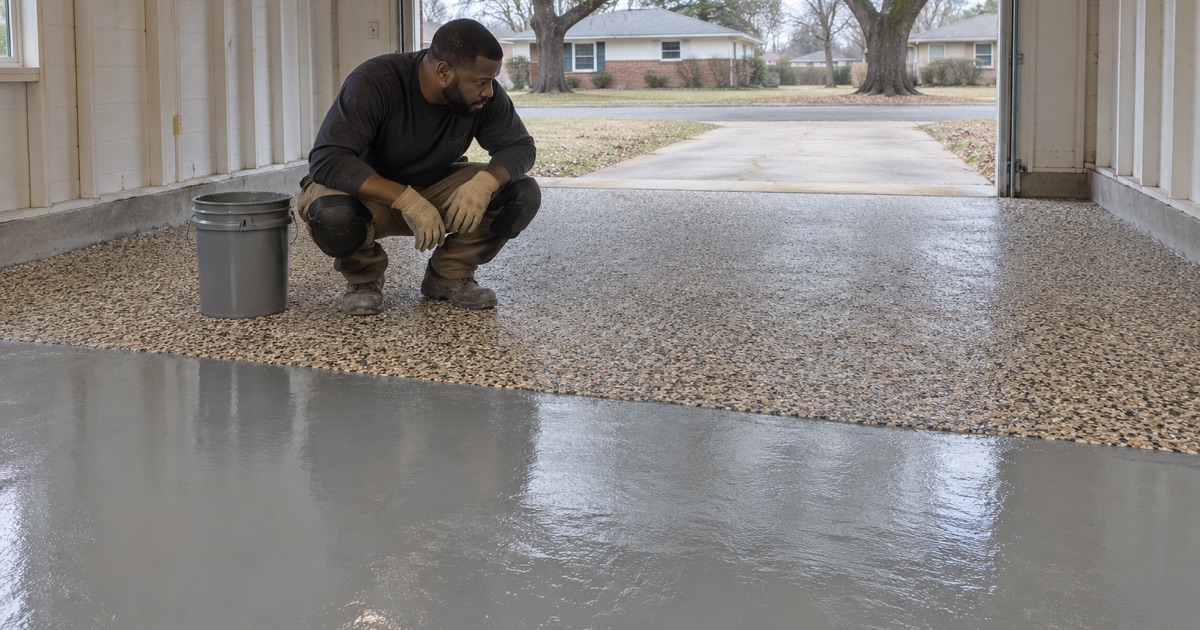
Grinding and Repair First
Every flake floor begins with diamond grinding, never acid etching. Grinding removes laitance, sealers, paint drips and stains and leaves a measured profile for the base coat to grip. Cracks and spalls are chased out, filled and ground flush during this stage.
We also test the slab for moisture with ASTM F1869 calcium chloride kits or ASTM F2170 relative humidity probes. Many garages around Gary were poured without a vapor retarder, and where readings run high, a moisture-mitigation primer goes down before the base coat.
Base Coat and Full Broadcast
The base coat is a tinted 100% solids epoxy or polyaspartic, rolled on in sections. While each section is wet, we broadcast vinyl flake by hand until the surface is completely covered, so no base color shows.
Once the base coat has set, we scrape the floor to knock off loose and standing flakes, then vacuum away the excess. Scraping leaves a smoother surface for the topcoat, and the amount of scraping helps control how much texture the final floor keeps.
Clear Topcoat
A clear polyaspartic topcoat locks the flakes in, fills the gaps between them and forms the wear surface. Polyaspartic resists abrasion, chemicals and ultraviolet light, so the colors stay true in garages with doors open to the afternoon sun.
The topcoat thickness decides how smooth or textured the finished floor feels. A thinner topcoat keeps more texture for grip, while a heavier coat gives a smoother, glossier surface that is easier to mop.
Choosing Flake Blend, Size and Coverage
Flake Blends and Colors
Flake comes in dozens of standard blends, from grays and tans that hide dirt to bold mixes with blues, reds and blacks. Custom blends can combine several colors, and many homeowners choose a blend that ties into cabinets, trim or the house exterior.
We bring physical samples, because flake looks different under garage lights than on a screen. Darker blends hide tire marks, while lighter blends brighten a garage and make dropped parts easier to find.
Chip Size and Pattern
Flake size changes the look more than most people expect. Small chips create a tight, speckled finish similar to granite, while larger chips create a bolder pattern that reads from across the room.
Smaller chips hide dust and small debris better, which is why they are common in busy garages and shops. Larger chips are often chosen for showroom garages and basements where the floor is part of the design.
Full Versus Partial Broadcast
A partial broadcast scatters flakes over a solid base color, leaving the base visible between chips. It costs less but adds less thickness and texture, and the solid areas show dust and scuffs.
We usually recommend a full broadcast for garages and working spaces. It adds build to the system, hides more slab imperfections and gives a more uniform, durable finish under tires.
Flake Floors in Northwest Indiana Garages
Road Salt and Brine
Cars coming in from salted roads drip rock salt and calcium chloride brine across the garage floor every winter. A full flake system keeps that brine on the surface, where it can be squeegeed out the door, and the texture hides salt residue between cleanings.
Thin coatings let brine creep under edges and lift the film, which is why we build flake floors in multiple layers and carry the system right to the walls and door threshold.
Hot Tires and Heavy Use
Hot tire pickup peels thin coatings where cars park. A ground slab, a strong base coat, a full broadcast and a hard polyaspartic topcoat together resist that, and the chips also help spread wear.
Workshops and garages that see jack stands, rolling toolboxes and dropped tools benefit from the same build. Small chips and scuffs blend into the pattern rather than standing out as they would on a solid color floor.
Cold Garages and Cure Schedules
Resin cures slowly on a cold slab, and coating too close to the dew point can leave the finish cloudy or tacky. We measure slab temperature and humidity before each coat and schedule unheated detached garages for warmer conditions rather than forcing a winter install.
Flake Floors Beyond the Garage
Basements and Laundry Rooms
In basements and laundry rooms, a flake floor gives a clean, seamless surface that handles washer leaks and foot traffic and hides minor slab flaws. Moisture testing matters even more below grade, and we size the primer and system to the readings.
Shops, Showrooms and Commercial Spaces
Auto shops, showrooms, locker rooms and commercial entries use flake floors for their durability and easy cleaning. In wet areas we add grit to the topcoat, and in commercial spaces we phase the work around business hours.
- 20+ Years Coating Concrete
- Written Moisture Testing
- Free Estimates