Gary Epoxy Flooring has spent more than 20 years putting epoxy flooring in Homewood homes and businesses on a simple premise: a coated floor should give up whatever lands on it to the mildest cleaner in the closet. That matters more than gloss when the room holds animals, litter or anything else that leaves a smell behind.
This page is about the scent side of a floor. A slab that has been opened properly, coated without pinholes and closed at every edge is one a person can clean with plain water and an unscented product, rather than one that needs a strong chemical to cover what has soaked in.
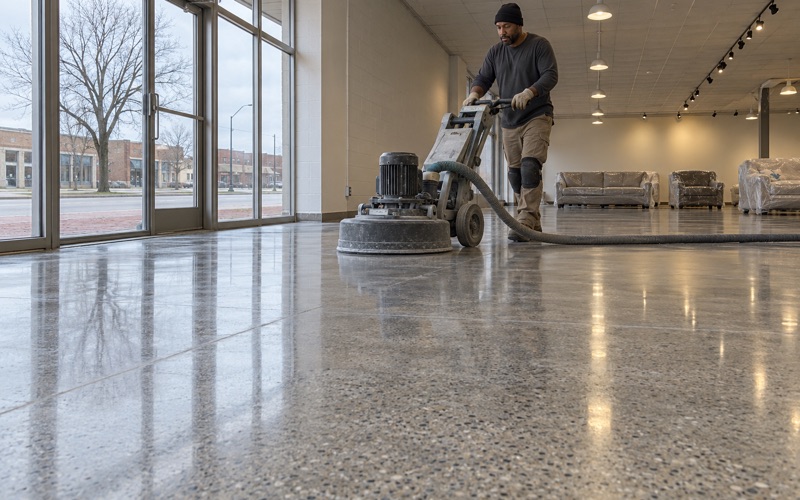
We grind or shot blast every slab instead of acid etching it, map the cracks and old paint before pricing, and write the moisture test and its passing number into the proposal. A coating does not remove odors by itself. What it can honestly do is stay smooth, continuous and easy to wash.
What a Cat Friendly Practice on Dixie Highway Asks of a Room
A new hospital built around cats
Homewood Veterinary Care, at 18265 Dixie Highway, describes itself as a brand-new, AAHA-accredited practice and says it is Cat Friendly certified, with Fear Free certified team members. It sees dogs and cats for surgery, dental care and wellness visits.
We point to it because it is the clearest local example of a room planned around how a cat experiences a space. We have no connection to the practice and have not seen its floors, cabinets or cleaning supplies, so nothing here describes what is installed there.
The certification rests on a published standard. The 2022 ISFM/AAFP Cat Friendly Veterinary Environment Guidelines, printed in the Journal of Feline Medicine and Surgery, spell out what a cat-centered clinic should look, sound and smell like.
Smell counts as part of the room
The guidelines treat scent the way most of us treat noise. They ask clinics to “thoroughly clean away the smells of other patients,” to “use unscented or minimally scented cleaning products,” and to avoid “chemical smells, perfumes and other strong scents” that may overwhelm a cat. Imaging areas, they add, should be cleaned to remove the scent of dogs before cats use them.
They go as far as suggesting dilute chlorhexidine in place of rubbing alcohol where possible, and they note that some cats prefer to settle on the floor. Read together, those lines make the floor one of the largest surfaces a cat smells, and one the guidelines want cleaned without a loud product.
Waiting areas get the same treatment. The guidelines ask that they be disinfected regularly with unscented or minimally scented products, that patient-related odors be cleaned away promptly, and that dog hair be swept up. Every one of those tasks ends at the floor.
The document never names a floor material, resin or otherwise. The connection to flooring is our reading of it, not a requirement it sets. What it does describe is a room cleaned often, gently and completely, and that is a job a floor either helps or fights.
Looking for epoxy-flooring closer to Hazel Crest? See Epoxy-Flooring in Hazel Crest.
Unscented Cleaners Need a Floor That Lets Go
Porous surfaces keep what a mild cleaner leaves
Bare concrete, worn sealer and tired vinyl seams share one habit: they absorb. Urine, wet hair and spilled food find pores and gaps, and a mild product wiped across the top cannot reach what has wicked down. That is usually when a strong-smelling disinfectant comes out, which is exactly what the cat-friendly guidance asks a clinic to avoid.
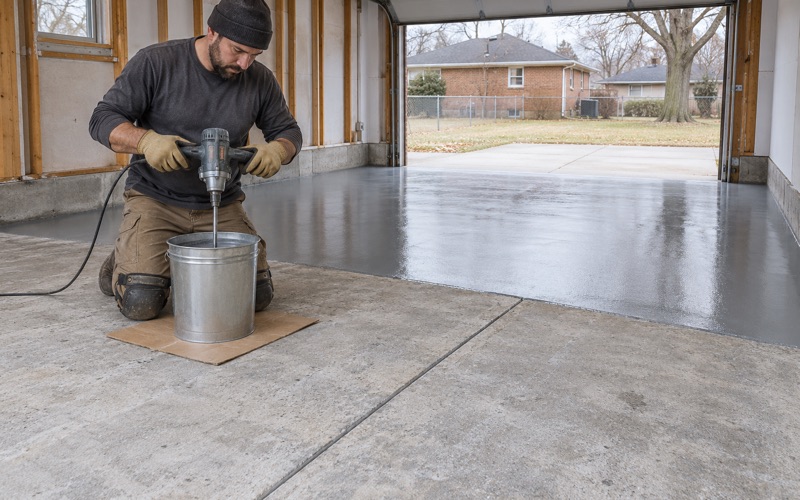
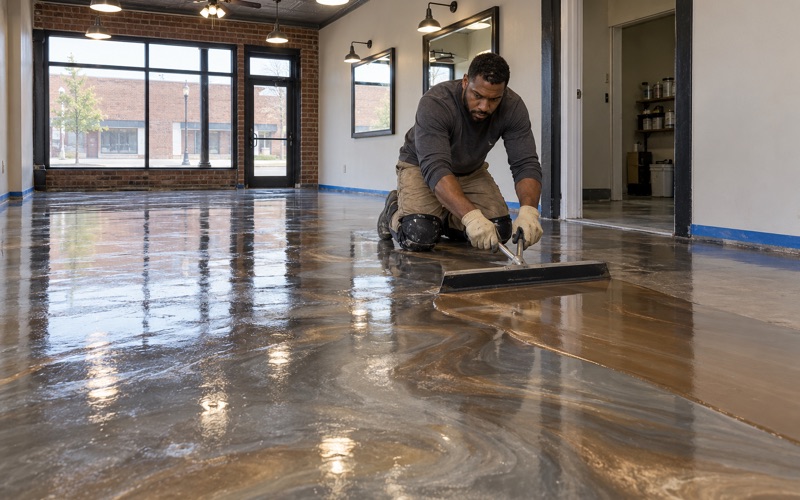
A continuous resin floor changes the starting point. A 100% solids epoxy base under a polyaspartic or polyurea topcoat cures into a non-absorbent film, so soil sits on the surface where a damp mop and an unscented cleaner can lift it. The cleaning still has to happen; the floor just stops hiding the mess from it.
Pinholes, joints and texture decide the result
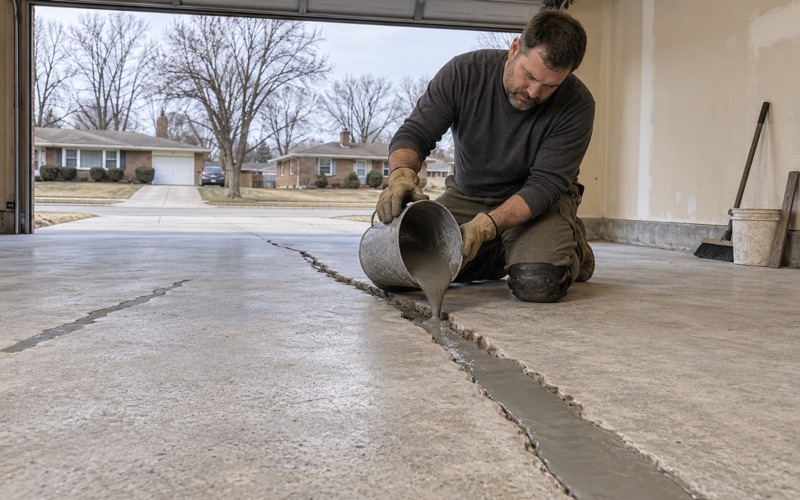
Non-absorbent only holds if the film is whole. Pinholes from outgassing concrete, thin spots over a poorly profiled slab and open saw-cut joints each give soil a place to lodge.
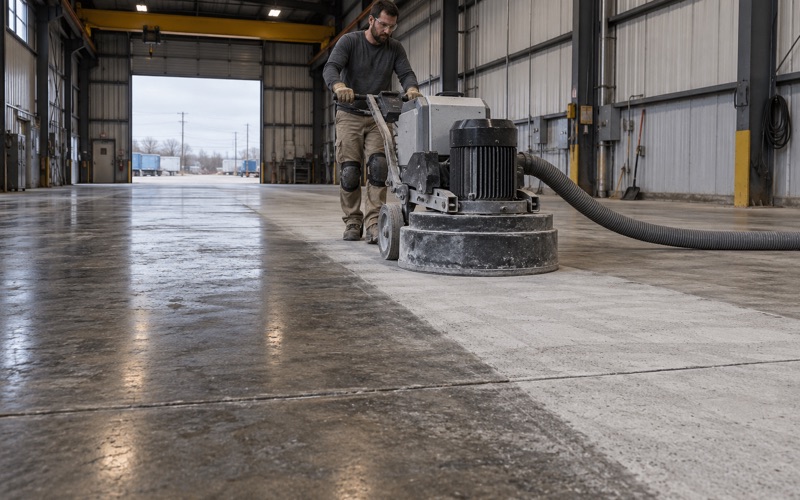
That is why we open the slab to a measured ICRI concrete surface profile with a diamond grinder or shot blaster, fill cracks and joints before the base coat, and name the product line, coat count and finished thickness in writing. The floor can then be checked against the quote rather than taken on trust.
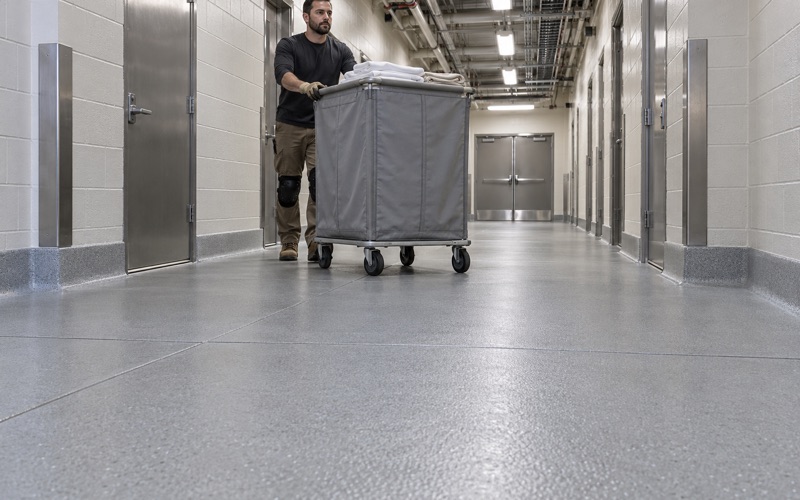
Texture is a cleaning decision too. A heavy quartz broadcast leaves deeper valleys that hold grit and hair, while a vinyl flake floor sealed under a full topcoat leaves a smoother face for a mop. We specify the texture by the broadcast and topcoat we actually use.
What the finish has to tolerate
A floor cleaned with mild products every day still has to stand up to that routine for years. A cured polyaspartic or polyurea topcoat holds up well to neutral cleaners and water, so there is no need to reach for something harsh to keep it looking clean.
Installation matters here too. Amine blush, the waxy film some epoxies form while curing in cool, damp air, can weaken the bond between coats and leave a tacky surface that holds soil. We follow slab temperature and dew point rather than the calendar so the film cures clean, and we remove blush before the next coat when it does appear.
Moisture comes before the price
Moisture rising through a slab can lift a coating and reopen the very gaps described above. Our proposal names the test, whether ASTM F2170 relative humidity probes or ASTM F1869 calcium chloride, and the number the slab has to pass before we coat. The ASTM D4263 plastic sheet test can flag an obvious problem, but it is a screen, not the number we write into a scope. Moisture is also the first exclusion we explain in any warranty.
Closing the Line Where Floor Meets Cabinets and Seating
Blocked off down to floor level
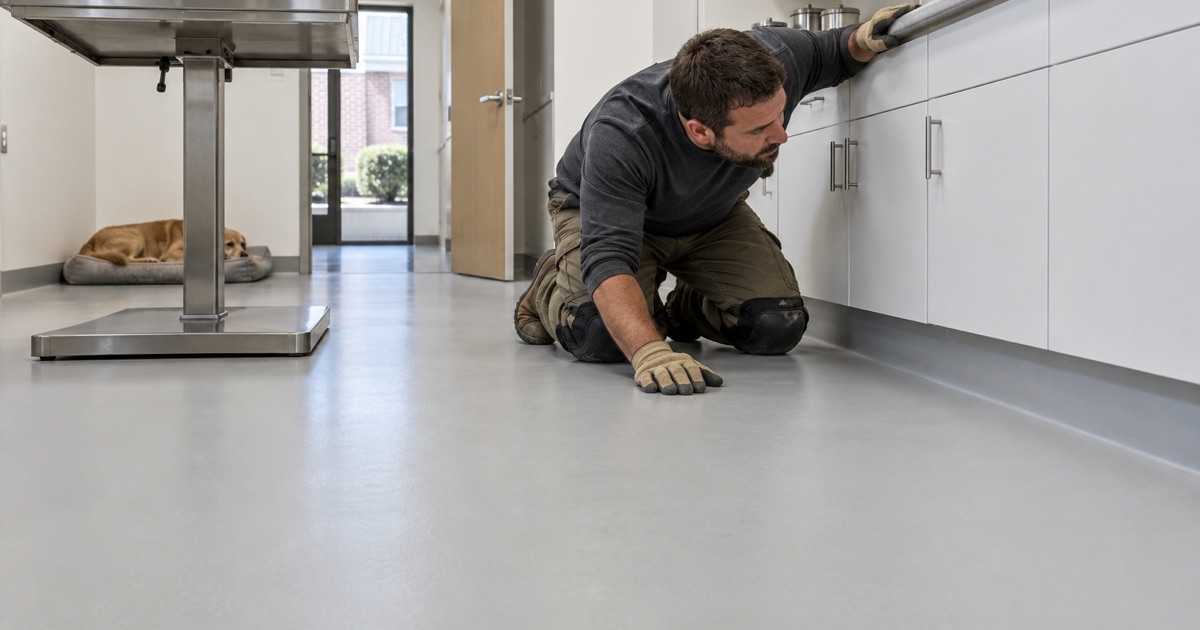
In exam rooms, the guidelines say difficult-to-access areas under cabinets and seating should be blocked off down to floor level, so a frightened cat cannot wedge itself where no one can reach. That same gap is where hair, dust and spilled fluids collect out of sight of the mop.
Closing it serves the cat and the cleaning crew at once. An open toe space is a hiding place for an animal and a reservoir for whatever the last patient left behind. For a homeowner, the same idea applies to the gap under a laundry cabinet or a workbench in the basement: if the coating stops short of it, that strip becomes the dirtiest part of the room.
How the coating meets the casework
On a resin floor, a closed line is detail work. An integral cove base carries the coating a few inches up the wall or toe kick in one piece, so there is no seam for liquid to enter. Where cabinets or fixed benches sit on the floor, the joint between coating and casework can be sealed so floor and furniture read as one closed edge.
The shape of the cove matters as much as its height. A rounded inside corner lets a mop head reach the full edge in one pass, where a square corner traps a line of hair and grit that only a brush will move.
Sequence matters. Coating under and around cabinets before they are set, or pulling toe kicks in an existing room, gives a cleaner line than cutting the coating up to a base that is already there, so we talk the order through with the cabinet installer before the grinder arrives.
For any room animals use, we also schedule the work so the coating has fully cured and the space has aired out before they come back.
Litter Corners, Old Slabs and Mild Cleaners at Home
The litter box on concrete
Most cat owners keep a litter box somewhere with a concrete floor: a basement corner, a laundry room or the garage. In Homewood, 87.2 percent of owner-occupied homes are single-family detached houses and 69.1 percent of housing units predate 1970, so many of those corners sit on older, unsealed slabs that have soaked up years of misses.
The habits a cat-friendly clinic follows translate well to a house. A coated litter corner, carried a few inches up the wall and sealed at its edges, can be cleaned with water and an unscented product, which keeps harsh cleaners out of a room the cat has to use every day.
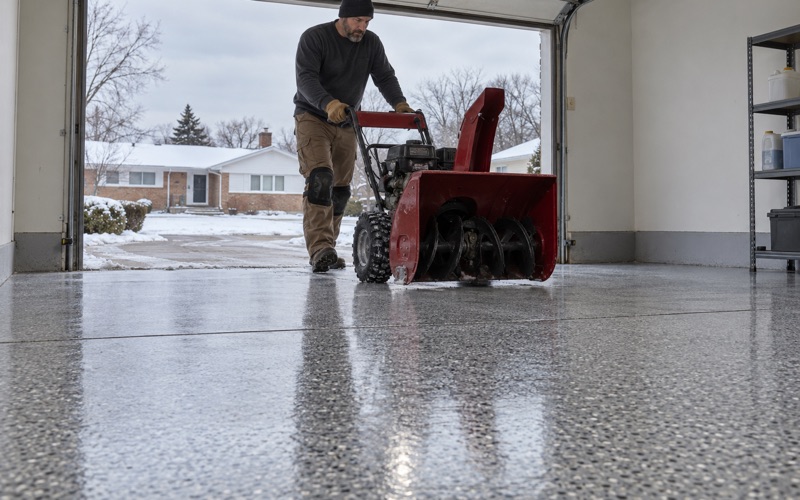
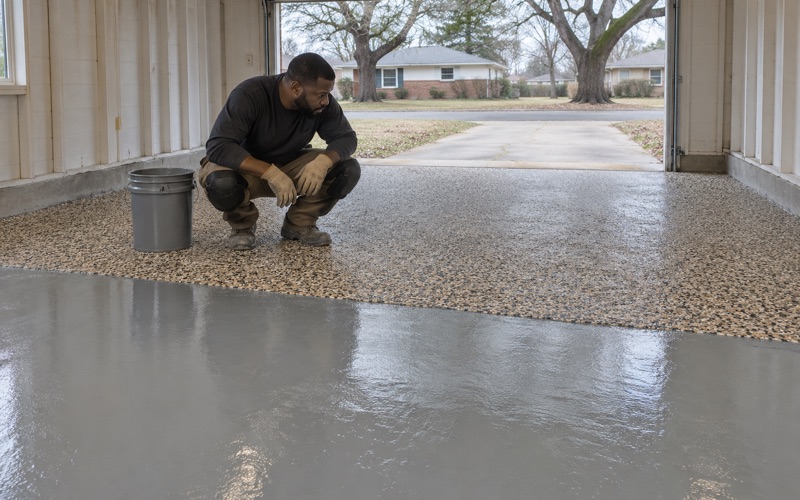
A garage litter corner has a second problem. Brine and rock salt ride in on tires and spread across the slab, so a garage system has to handle deicer as well as litter. We choose garage coatings for that salt exposure first, then detail the corner where the box sits.
Reading an old slab before coating it
Ground varies within the village. Ridge Road follows the sandy shoreline of prehistoric Lake Chicago, and Homewood also sits on limestone near Thornton Quarry, so a damp basement floor along the old shoreline may have a different cause than one a few blocks off it.
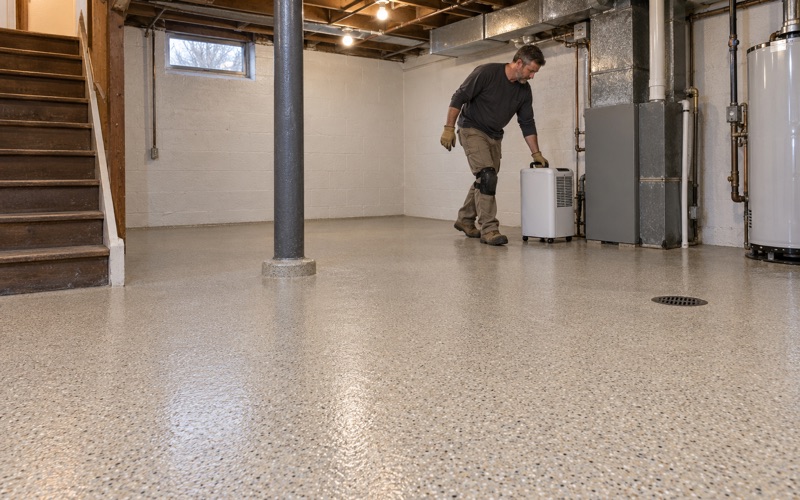
A basement slab from the 1950s or 1960s may also lack an under-slab vapor retarder, which is one more reason the reading, not the age of the house, decides the system. Where the number comes back high, a moisture-mitigation primer or a different system is the conversation, not a standard coat over a damp slab.
That is why the moisture reading comes before the quote rather than after the first coat. A coating is not flood protection or waterproofing, and we say so before anyone signs.
Checking with the village
Homewood’s building code is Municipal Code Chapter 22, updated in 2022-23. We have not confirmed whether a basement or garage coating needs a permit under it, so we check with the Community Development Department at 2020 Chestnut Road before work begins.
Illinois does not license general, flooring or coatings contractors, which makes a written scope, product list and thickness the homeowner’s clearest record of what was promised.
An exam room on Dixie Highway and a litter corner at the bottom of a Homewood basement stair face the same test: can the floor be cleaned completely with a product the cat barely notices? That is the floor we aim to leave behind.
- 20+ Years Coating Concrete
- Written Moisture Testing
- Free Estimates