
Gary Epoxy Flooring installs polyaspartic floor coating systems in Gary, IN, serving surrounding cities including Lake Station, Griffith, Highland, Hobart and East Chicago. Our crew has more than 20 years on concrete floors, and polyaspartic is the resin we reach for when a floor needs to cure fast, hold its color in sunlight and wear hard at the surface for years.
Polyaspartic is an aliphatic polyurea, a two-part coating that cures in a fraction of the time most epoxies need. That speed is what makes it useful and what makes it unforgiving: it gives the installer minutes, not hours, to spread and back-roll each batch, so it rewards a crew that has done it many times and punishes one that is learning on your floor.
The resin itself is only half of the story. A polyaspartic coating bonds no better than the slab beneath it allows, so every job still starts with a diamond-ground surface, a written moisture test and a mapped repair plan. The proposal names the product line, the number of coats and the finished thickness before we start.
Where Polyaspartic Floor Coatings Work Best
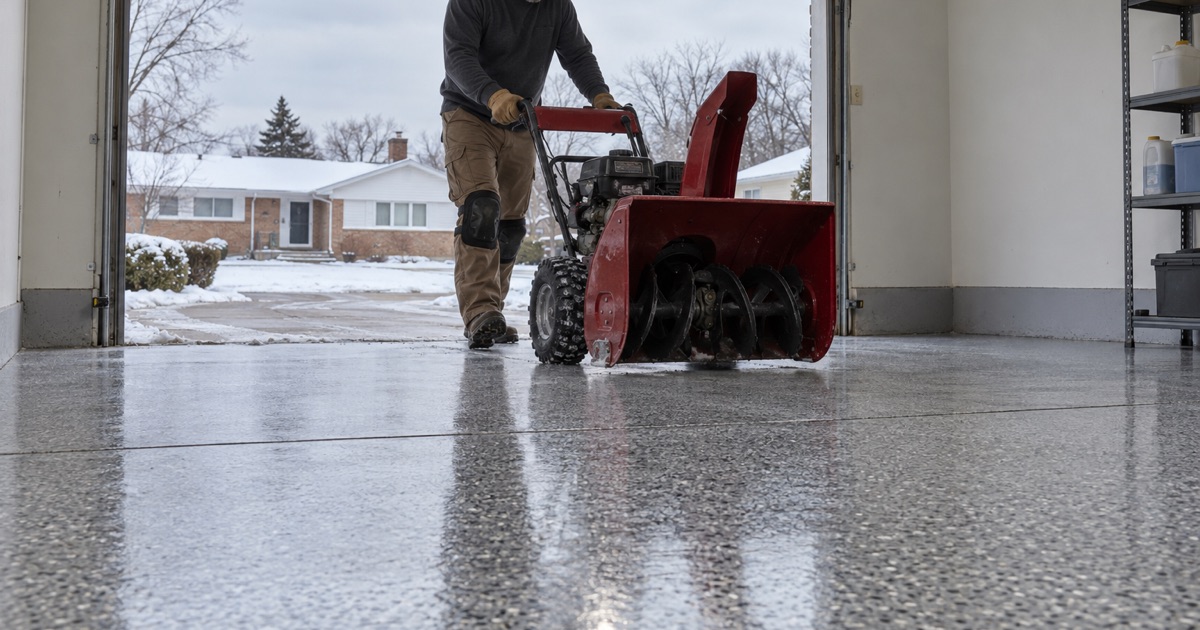
Garages That Need to Be Back in Use Quickly
A polyaspartic garage floor can often go from bare concrete to finished in a single day on a sound slab, and cars can usually return within about a day after that. For families who park inside through a Northwest Indiana winter, that short downtime is the main appeal.
We still build the system properly for that speed. Grinding, crack repair and a full flake broadcast all happen on the same schedule, and if the slab needs a moisture-mitigation primer or major repair, we add the time rather than skipping the step.
Floors in Direct Sunlight
Epoxy ambers when ultraviolet light hits it, which shows first near open garage doors, showroom windows and sunlit entries. An aliphatic polyaspartic topcoat is ultraviolet stable, so clear coats stay clear and colors stay true where the sun reaches the floor.
That is why many of our epoxy floors still finish with a polyaspartic topcoat. The epoxy base gives build and deep adhesion, and the polyaspartic layer protects the color and takes the wear on top.
Shops and Businesses That Cannot Close Long
Retail spaces, auto repair bays, offices and back-of-house areas lose money every day a floor is closed. A polyaspartic system can be installed in sections overnight or over a weekend and reopened quickly, which keeps a business running while the floor gets done.
We phase those jobs around shifts and deliveries, close only the area being coated, and keep grinding dust contained with vacuum-connected machines so neighboring areas can keep working. Signage and taped barriers mark each closed section until its topcoat is ready for traffic.
How Polyaspartic Compares With Other Floor Systems
Polyaspartic Against Epoxy
Epoxy builds thicker in one coat, has a longer working time and bonds deeply into a ground profile, which is why it still makes an excellent base layer. Polyaspartic cures faster, resists ultraviolet light, and is harder and more scratch resistant at the surface.
The best choice often uses both, but some floors suit a full polyaspartic build. We look at the slab, the season, how quickly you need the space back and how much sun the floor sees before recommending one or the other.
Polyaspartic Against Polyurea and Urethane
Polyaspartic is a member of the polyurea family, tuned to cure slowly enough to spread by hand. Pure polyurea sets so fast it is usually sprayed, and it is less common on interior floors. Urethane topcoats and urethane cement are used where heat, chemicals and hot washdown are the main concerns, such as commercial kitchens and food plants.
Each of these chemistries has a job it does best, and a floor can combine them. A repair bay might take an epoxy base, a polyaspartic topcoat in the work area and urethane cement around a wash station, with the transitions planned so the systems meet cleanly instead of leaving seams that collect fluid and dirt.
Polyaspartic Against Store-Bought Kits
Some retail kits are labeled polyaspartic, but they are often thin, single-coat products applied over an acid-etched slab. Without grinding, crack repair and a full system build, they share the same weaknesses as other kits, including peeling under hot tires and lifting where brine gets under the edges.
The short pot life that makes polyaspartic fast also makes kit versions hard to apply well. A homeowner mixing a batch in a hot garage can watch it start to set in the pail before it is spread, leaving roller marks, thin spots and lap lines that become the first places a coating wears through.
Building a Polyaspartic Floor for Northwest Indiana
Grinding and Moisture Testing
We grind every slab with diamond tooling to a measured profile, because a smooth, etched surface gives the coating nothing to hold. Then we test for moisture with ASTM F1869 calcium chloride kits or ASTM F2170 relative humidity probes and write the passing number into the proposal.
Many older garages around Gary were poured without a vapor retarder over sandy, damp ground. Where readings run high, a moisture-mitigation primer goes down first, because a fast-curing topcoat does nothing to stop vapor pushing up from underneath.
Cure Conditions and the Dew Point
Polyaspartic tolerates cooler temperatures than most epoxies, which extends the season for garage work. Humidity and the dew point spread at the slab surface still control how it cures, and coating a slab that is too close to the dew point can trap moisture and cloud the finish.
We measure slab temperature, air temperature and humidity before each coat and adjust the schedule. In an unheated detached garage during deep winter, we recommend waiting rather than racing a fast resin against a cold slab.
Flake, Quartz and Grip Options
Polyaspartic works with vinyl flake broadcast, quartz aggregate and solid color systems. A full flake broadcast hides small slab defects and adds texture, quartz adds grip in wet areas, and a fine grit additive in the topcoat gives traction on sloped aprons.
We specify slip resistance by the broadcast and topcoat used, not by a promise, so the level of grip matches how the floor is used. Garages with snowmelt and commercial entries usually get more texture than a dry basement or office.
VOC Limits and Product Selection
Indiana’s 326 IAC 8-14 caps floor coatings at 250 g/L and industrial maintenance coatings at 340 g/L, and it binds the applicator as well as the manufacturer. Many polyaspartic products are formulated with low VOC content, and we choose products inside those limits and never thin them on site.
Gary’s Calumet Township also sits inside the Chicago 2015 ozone nonattainment area, which is part of why the state takes coating emissions seriously. Thinning a product past its limit to stretch working time is itself prohibited, so we control working time with batch size, crew size and temperature instead.
Warranty Terms Explained Before the Sale
A polyaspartic topcoat resists wear and sunlight, but no coating warranty covers moisture pushing up through the slab. We walk through what the written warranty includes and excludes before you sign, starting with moisture, and we explain how the moisture test result connects to that coverage.
Other common exclusions include hydrostatic pressure, chemical spills left standing, and impact damage from dropped heavy objects. Knowing those limits up front helps you choose the right system for how you actually use the floor.
Written Contracts on Home Jobs
Every residential job gets a written contract that carries the items Indiana’s Home Improvement Contracts Act lists, including a description of the work, approximate start and completion dates and the contract price. You receive and sign it before any grinding begins.
- 20+ Years Coating Concrete
- Written Moisture Testing
- Free Estimates