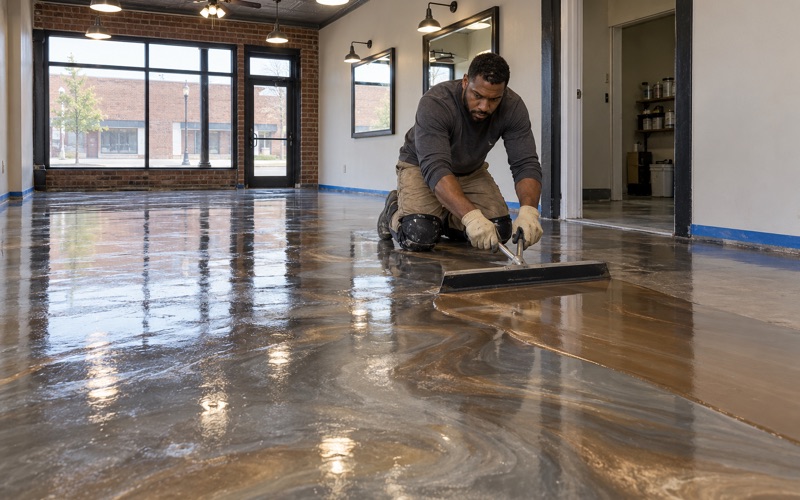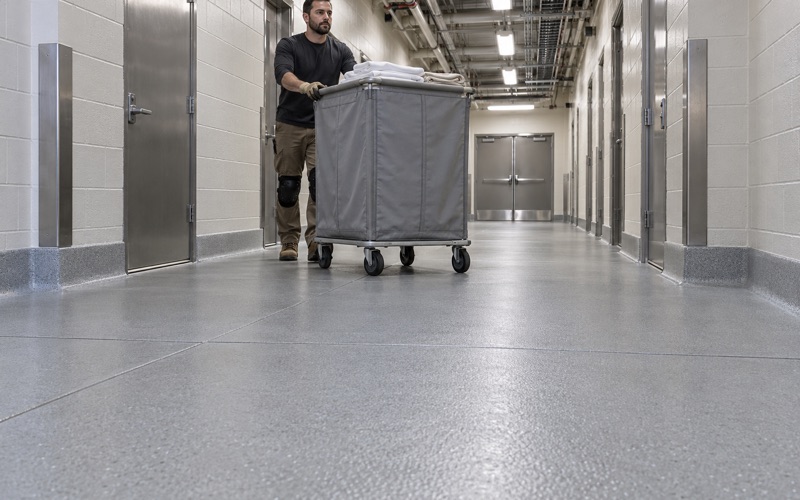
Gary Epoxy Flooring has spent more than 20 years on epoxy flooring in Riverdale and the rest of the south suburbs, and the jobs that teach the most are the ones where a floor gets wiped, mopped and disinfected every working day. A clinical room asks a coating to do something a garage never does: stay seamless and non-absorbent so whatever lands on it can be found and removed.
That is why this page is built around one kind of building, the dental office, where the floor is decided room by room rather than by taste. A treatment room, a lab bench area and a sterilization room each ask for a hard, closed surface, while the waiting room is a separate call made on comfort and looks.
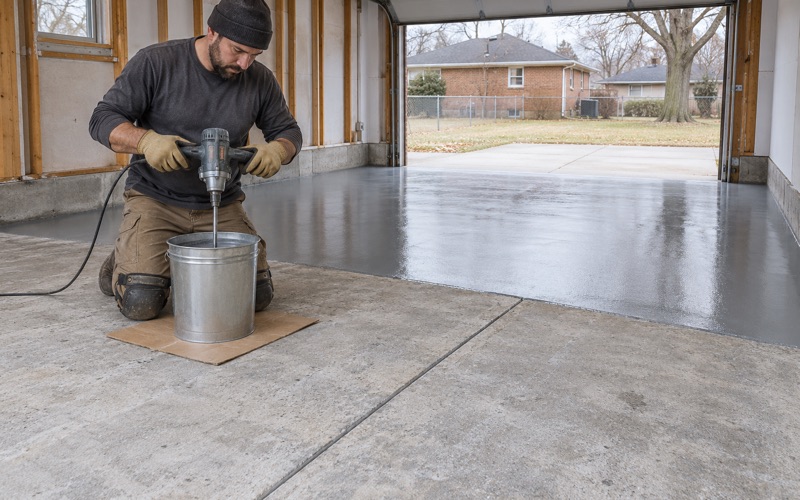
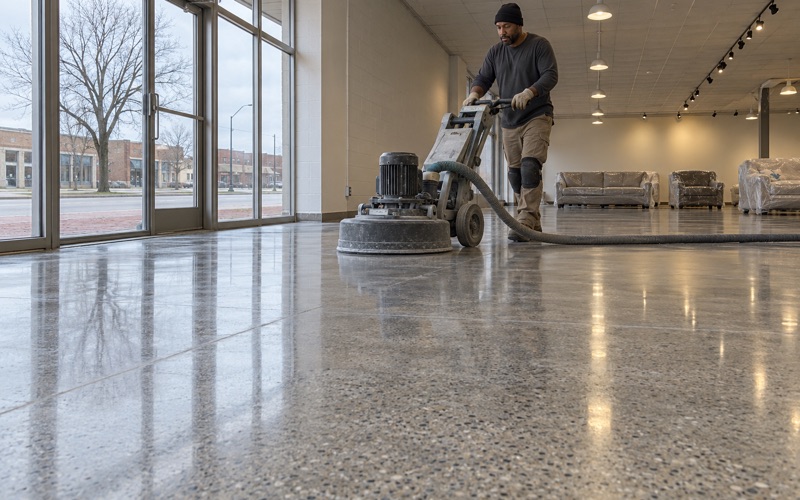
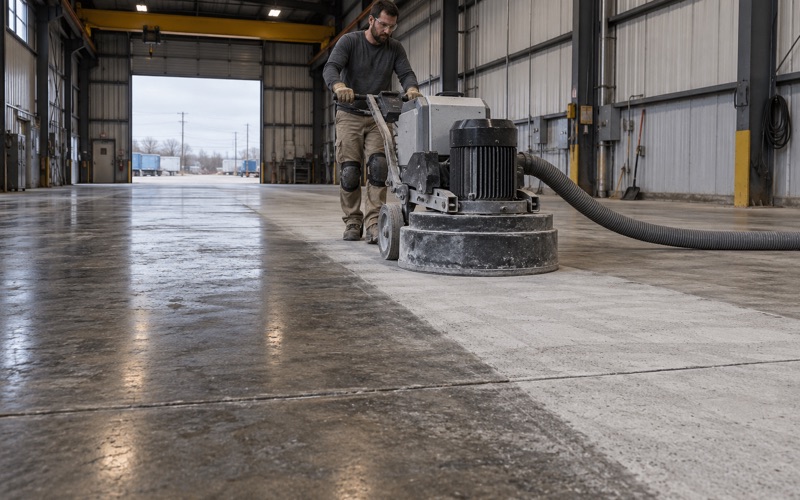
We also coat basements and garages across the village, and the same habits carry over: the slab is opened with a diamond grinder or shot blaster, moisture is tested before the price is final, and the proposal states what goes down and how thick. None of it involves an acid etch.
A Dental Office on 144th Street and the Carpet Question
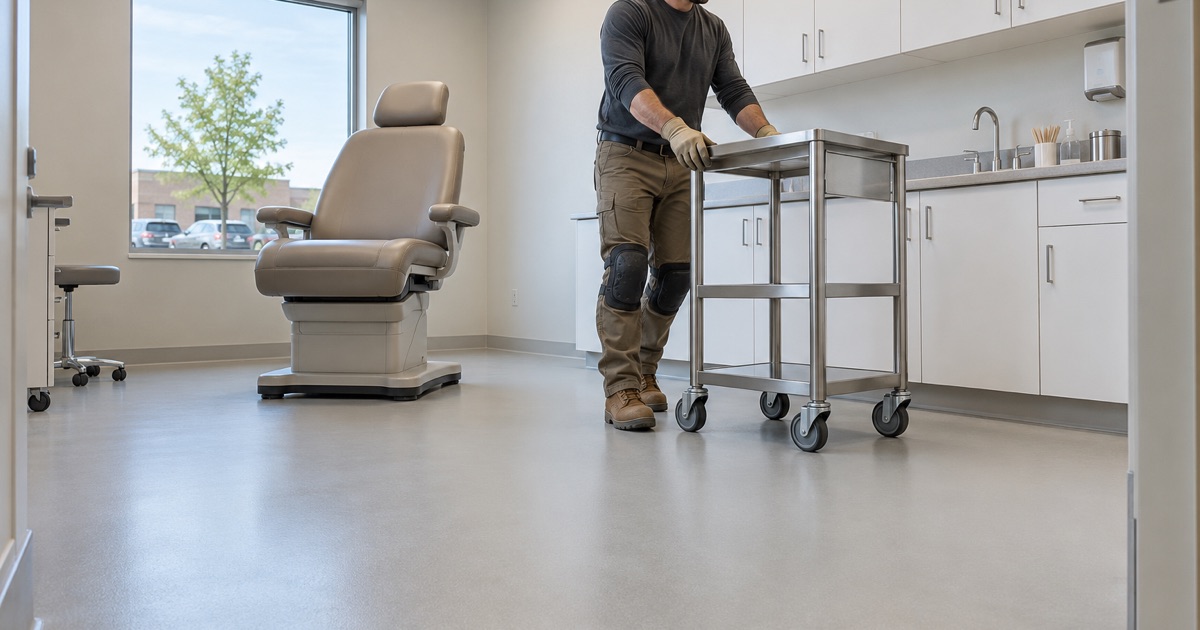
One practice near the Ivanhoe stop
Ivanhoe Dental Group is a general dental practice at 61 W. 144th Street, open weekdays from 9:00 a.m. to 5:00 p.m., near the Ivanhoe Metra Electric station. That address falls on the Thornton Township side of Riverdale, a Cook County village that also reaches into Calumet Township.
We name the office only to make the guidance concrete. We have no connection to the practice and have not seen its rooms, so nothing here describes what is on its floors.
The line in the 2003 guidelines
CDC’s Guidelines for Infection Control in Dental Health-Care Settings, published in 2003, include a short recommendation that shapes floor choices in any dental building: “Avoid using carpeting and cloth-upholstered furnishings in dental operatories, laboratories, and instrument processing areas.” The stated reason is plain: “Carpeting is more difficult to clean than nonporous hard-surface flooring,” and the difference matters most when blood or other body substances are spilled.
Carpet holds a spill in its fibers and backing, where a wipe cannot reach and a disinfectant cannot make full contact. Cloth upholstery has the same problem, and the guidance names the two together. A hard, nonporous floor keeps the spill on the surface, where staff can see its edge and treat all of it.
That recommendation carries CDC’s category II rating, which makes it guidance rather than a law or a building code. A floor coating does not make an office compliant with anything; what it can do is give the room the kind of surface the guidance points toward, with no pile, no fibers and no seams to hold a spill.
Where the waiting room fits
The carpet line names three kinds of rooms and stops there. A reception area or waiting room falls outside it, so an office can choose carpet tile, resilient flooring or a decorative coating out front on its own terms. The clinical floor can run down the hallway so the change of surface sits at the front doorway, or stop at each clinical door; either works when the transition is planned.
Looking for epoxy-flooring closer to Harvey? See Epoxy-Flooring in Harvey.
Operatory, Lab and Sterilization Room: Three Floors to Get Right
The operatory
An operatory floor takes rolling stools, a chair base fixed to the slab, and spatter that lands well beyond the chair. For that room we generally look at a 100% solids epoxy body coat under a polyaspartic or polyurea topcoat, laid as one continuous film with no grout lines or tile seams.
Grip matters where rinse water and spray reach the floor, but texture has a cost in a room cleaned this often, because a coarse profile holds soil and shreds mop heads. We specify the slip resistance by the quartz aggregate broadcast and topcoat named in the proposal, aim for a light texture that still wipes clean, and let the office decide with a sample in hand.
The dental lab
A lab bench area collects plaster, stone and polishing debris, and the floor beneath it gets dragged chairs and dropped tools. A thicker epoxy build handles that abrasion better than a thin roll-on paint, and where a lab sees heat or harsh cleaners, urethane cement is worth pricing alongside it. Either way, the proposal names the product line, the number of coats and the finished thickness, so the floor can be checked against the quote later.
The instrument processing room
CDC describes instrument processing in a designated central area divided into sections, starting with receiving, cleaning and decontamination, ideally separated by walls or partitions to control traffic flow. That puts sinks and cleaning equipment close together, and splashes near the sinks are part of the working day.
In that room the floor-wall joint is where a hard floor tends to stop being a cleanable surface, because a square corner behind a rubber base collects whatever a mop pushes into it. An integral cove, with the coating run a few inches up the wall over a formed radius, closes that joint so floor and wall clean as one surface. We carry the same cove into operatories and the lab wherever the walls allow it.
Detergent, Water and a Spill Plan for Clinical Floors
Everyday cleaning
The guidelines ask for housekeeping surfaces, floors included, to be cleaned with a detergent and water, and they add that floors should be cleaned regularly and spills cleaned up promptly. A seamless coating keeps that routine simple: no grout to scrub, no tile edges for a mop to catch, and a topcoat chosen to tolerate the detergent the office already uses.
Before a topcoat goes into a proposal, we ask which cleaning products the staff use and how often. Some disinfectants dull certain finishes over time, so the product data sheet and the cleaner have to agree before the floor goes down, not after.
When blood reaches the floor
For blood or other potentially infectious material, CDC’s step changes: clean up the spill, then decontaminate the surface with an EPA-registered hospital disinfectant. The floor’s part in that moment is passive. It has to give the disinfectant a closed surface to work on, with no pores, cracks or seams for the spill to wick into.
A coating is not a disinfectant and does nothing to germs on its own, so we never describe one as antimicrobial or sterile. Its value is a surface that can be cleaned completely, which is exactly what the carpet guidance is after.
Keeping the surface closed and the office open
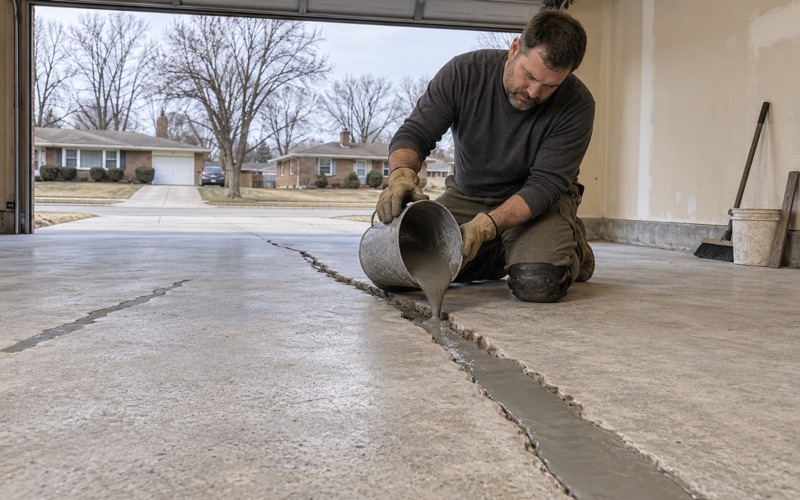
A floor stays closed only while the slab under it stays sound. We map cracks, spalls and old adhesive before quoting, repair what can be repaired, and say so when a section needs more than a coating can give, because a coating laid over a crack that still moves will open along it.
A working practice rarely closes for a week. We work one operatory or the sterilization room at a time, in evening and weekend windows where needed, with grinding dust captured at the machine by a vacuum instead of drifting toward clean rooms. Cure times follow slab temperature and dew point, and the schedule lists when each room can take foot traffic and when its equipment can go back.
Seamless Floors at Home Where Cleanup Matters
The same thinking travels home. A basement laundry, a back entry off the garage, or a garage that tracks in winter slush each reward a floor that keeps liquids on top where they can be wiped away. About three quarters of Riverdale’s housing units were built before 1970, and we plan for old paint, patches or adhesive that has to come off first.
Laundry rooms and salted garages
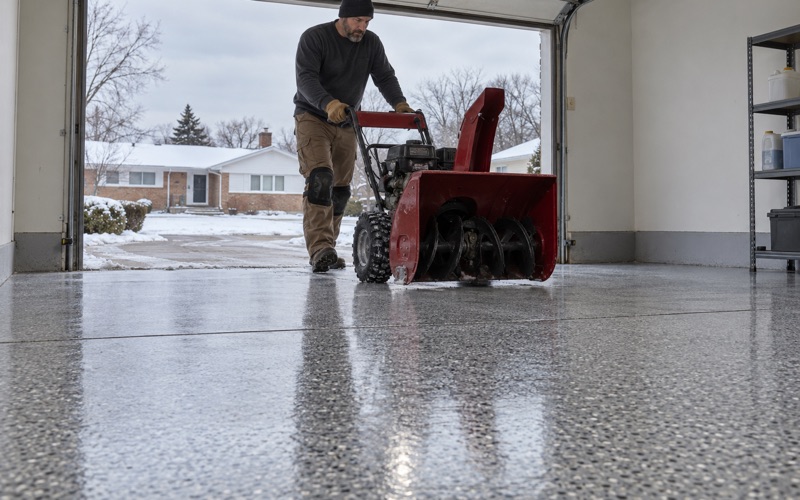
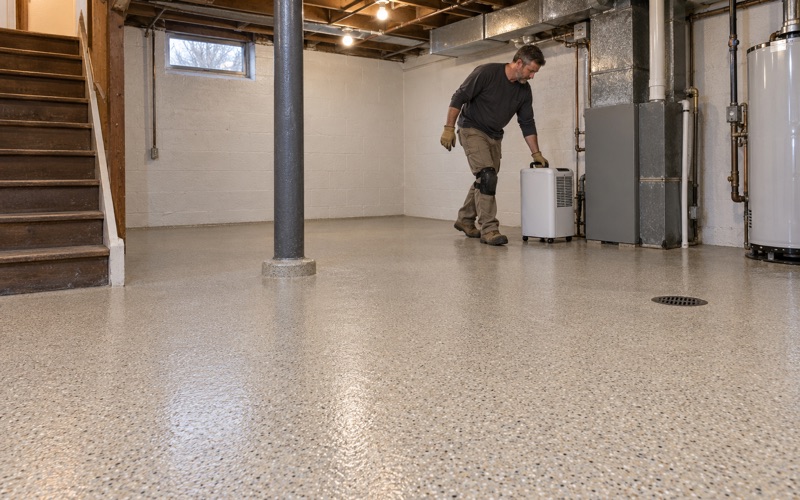
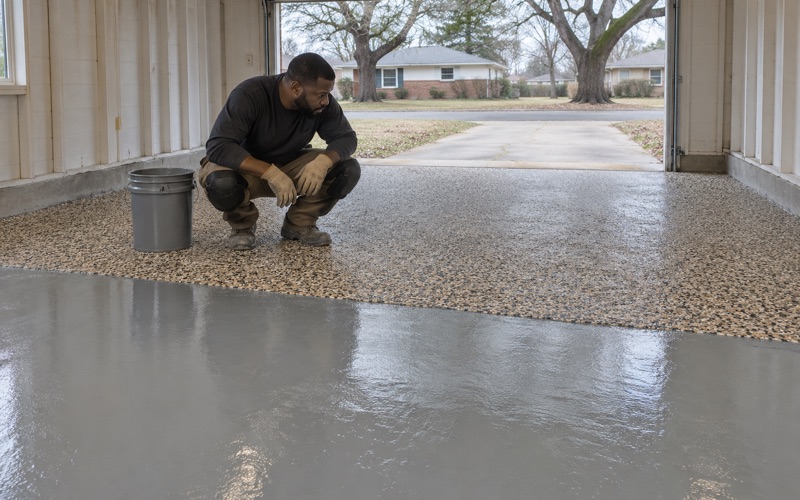
For a basement laundry or utility room we lean toward the same seamless build used in clinical rooms, sometimes with a short cove at the walls where a washer or sink can overflow. A garage gets a vinyl flake broadcast under a polyaspartic topcoat chosen to stand up to brine and rock salt, over a base coat built to resist hot tire pickup. An unheated garage in deep winter is told to wait for a warmer slab rather than coated by the calendar.
Moisture before price
A basement slab is tested before the price is final, and the proposal names the method and the number it has to pass: ASTM F1869 calcium chloride, ASTM F2170 in-situ relative humidity probes, or a quick ASTM D4263 plastic sheet check as a first look. When the reading is high, a moisture-mitigation primer goes into the scope, and moisture is the first exclusion we walk through in the warranty.
The village’s own hazard plan names seepage and sewage in basements, along with backups on the northeast side, where a sewer separation project has since been completed and is credited with reducing flooding. A floor is coated after the water source is dealt with, never instead of it, and we never sell a coating as waterproofing or flood protection.
Checking with the village first
Riverdale’s list of work allowed without a permit includes installing floor coverings, but it does not name floor coatings, so we confirm with Inspectional Services at 725 W. 138th Street before scheduling. The village also requires contractors to register before working in town, and we check that, along with bond and insurance, before a job is booked.
A treatment room and a basement laundry look nothing alike, yet the reasoning behind CDC’s carpet guidance works for both: when something spills, can all of it be found and removed? That question decides the system we propose, and when a slab cannot pass it yet, we say what has to be fixed first.
- 20+ Years Coating Concrete
- Written Moisture Testing
- Free Estimates