Gary Epoxy Flooring has spent more than 20 years on epoxy flooring in Summit and the rest of our service area, and a towing garage asks us a different first question than a home garage does. The owner of a shop that hauls wrecks wants to know whether the new floor changes what can be parked on it. Where an electric vehicle is involved, the honest answer is that a coating changes very little about that.
A resin floor is a finish laid over concrete. It makes a shop easier to clean, brighter to work in and quicker to read when something leaks, but it is not a fire barrier and it does not decide where a crash-damaged lithium-ion vehicle may wait. This page covers both halves: where a wreck belongs, and what a coated tow garage is actually good for.
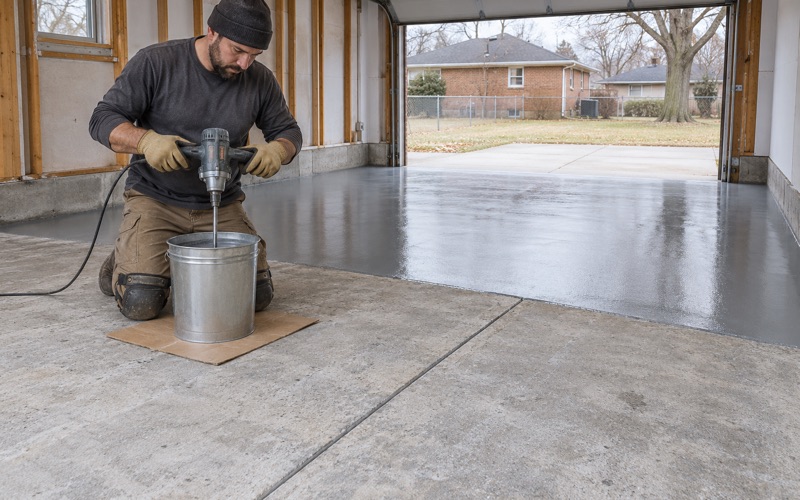
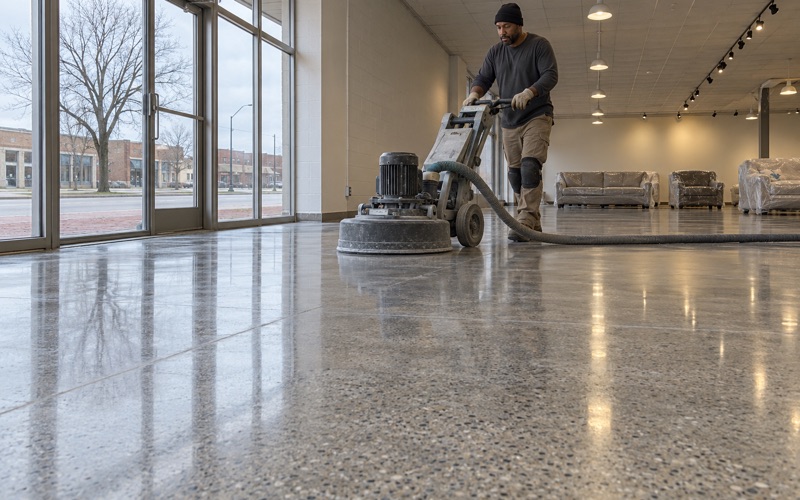
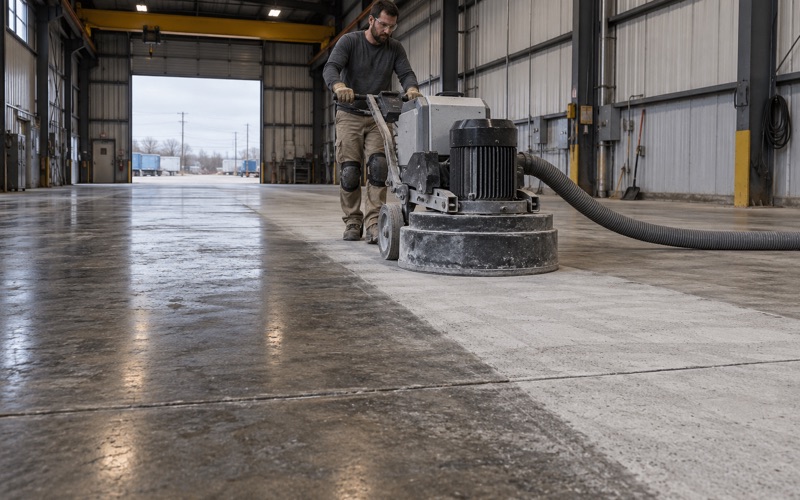
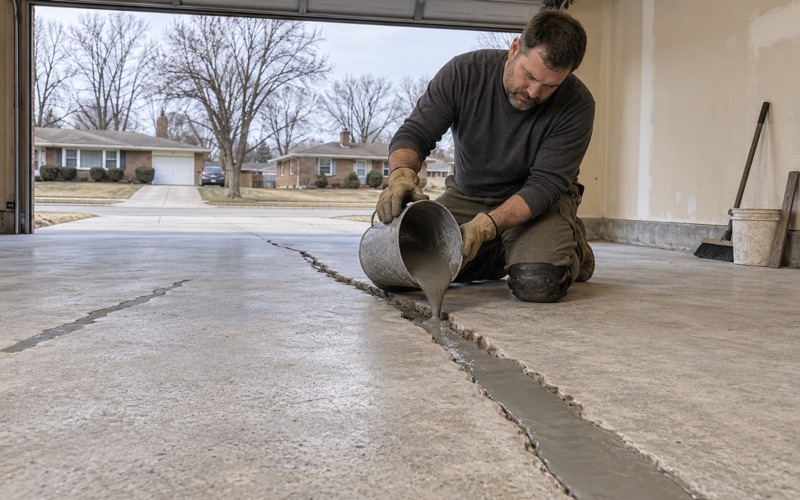
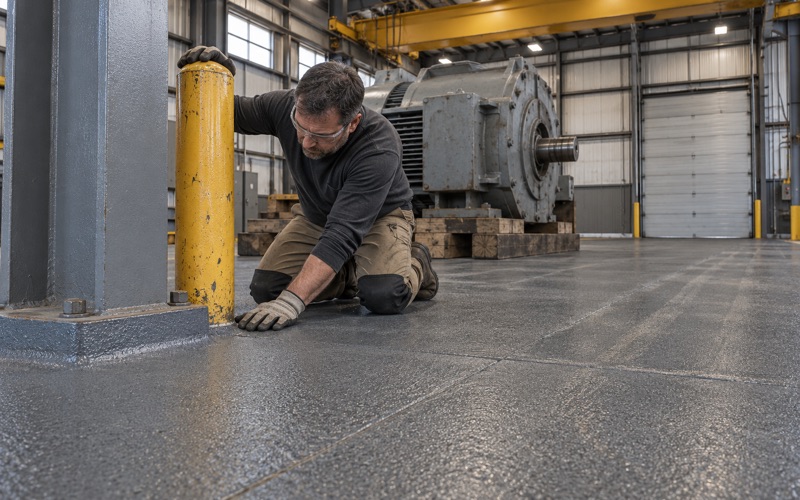
We start every bid the same way, with the slab. Cracks, spalls and old paint are mapped, moisture is tested by a method named in the proposal, and the surface is opened by diamond grinding or shot blasting before any resin goes down.
A Recovery Yard on West Lawndale Avenue and the 50-Foot Rule
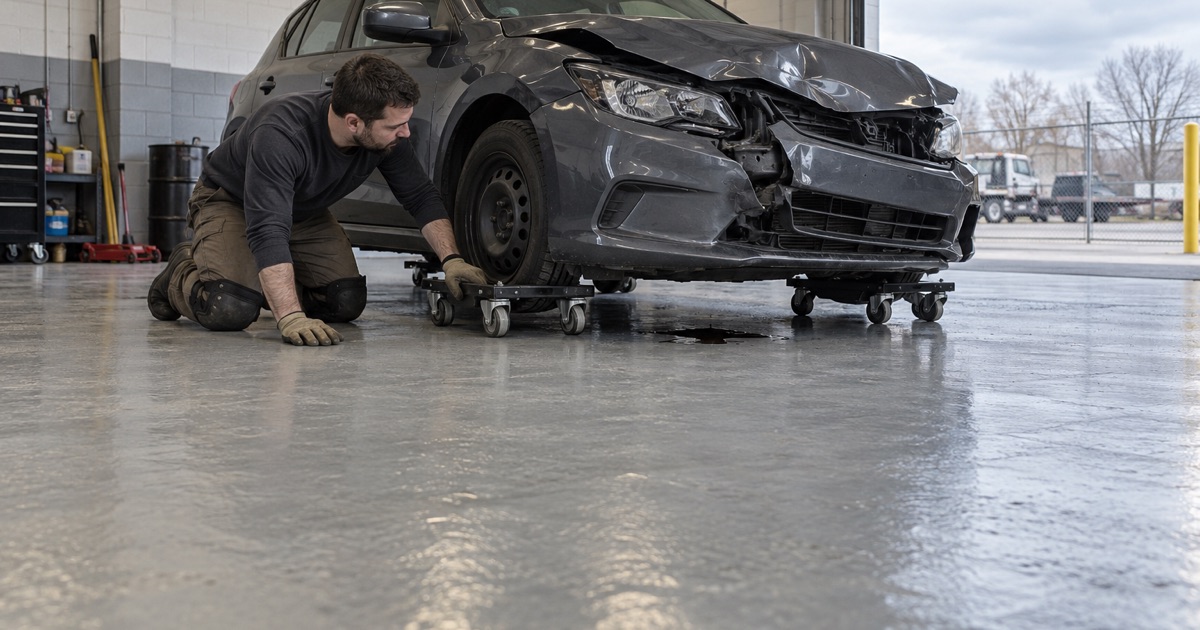
Kustom Towing works out of 7664 W. Lawndale Avenue in Summit and has been in business since 1979. Its fleet runs flatbeds and rotators, and its own site describes light-duty to heavy-duty towing, accident and off-road recovery, impounds and HAZMAT cleanup. We name it here because it shows the kind of work done in this village, not because we have a relationship with it; we have not seen its floors or how it stores vehicles.
A truck-stop directory lists the company with a 50 Ton Rotator, the kind of equipment used to recover large commercial trucks. A business that handles accident recovery and impounds will, sooner or later, take in a wreck with a lithium-ion battery pack.
What federal towing guidance says about a damaged EV
NHTSA published interim guidance for towing and recovery operators and vehicle storage facilities handling electric and hybrid vehicles, document DOT HS 811 576, Version 2, dated March 2014. It is guidance, not a statute and not a village ordinance. Its storage instruction is blunt: do not store a severely damaged vehicle with a lithium-ion battery inside a structure or within 50 feet of any structure, vehicle or combustibles.
The same document warns of a potential for delayed fire with damaged lithium-ion batteries. A wreck that looked quiet at the scene can change later, which is why the guidance also asks that stored vehicles keep clear access for monitoring and emergency response.
Outdoors, clear and watched
Read plainly, a severely damaged EV belongs outside, in an open spot with distance on every side and a path a fire crew can reach. That decision is made in the yard layout, long before anyone picks a floor color for the garage.
The guidance also asks that the passenger and cargo compartments stay ventilated, and that the vehicle be inspected before it is placed and while it sits. Leaking fluids, sparks, smoke, flames, gurgling or bubbling from the battery mean a call to 911. None of that is a flooring task, and we would not pretend otherwise when a tow operator asks.
Looking for epoxy-flooring closer to Lyons? See Epoxy-Flooring Services in Lyons.
Why a Floor Coating Is a Finish, Not a Fire Barrier
Epoxy, polyaspartic and polyurea are organic resins. Once cured they are tough, but they are still a combustible finish bonded to the top of a slab, and no topcoat we install is sold as fire separation or as protection against a battery fire. The concrete underneath does the structural work; the coating is a surface.
What the coating does not change
A coated floor does not shorten the 50-foot distance in the guidance, and it does not make a building a safer place to park a wreck. If anything, a garage full of resin, tires, fuel and stored parts is a list of combustibles, which is exactly what the distance is meant to keep a damaged battery away from.
Fire separation in a building comes from walls, ceilings and doors built and rated for that job, and from the distance outdoors that the guidance describes. Questions about that belong with the Summit Fire Department and the village Building and Public Works department on West 59th Street, not with a flooring contractor.
We say this in the proposal, in writing, for the same reason we spell out what a coating warranty excludes before the job is sold. A floor bought for the wrong reason is a floor that disappoints, and a tow operator should hear the limit from the installer rather than discover it later.
What a coating can honestly offer a shop
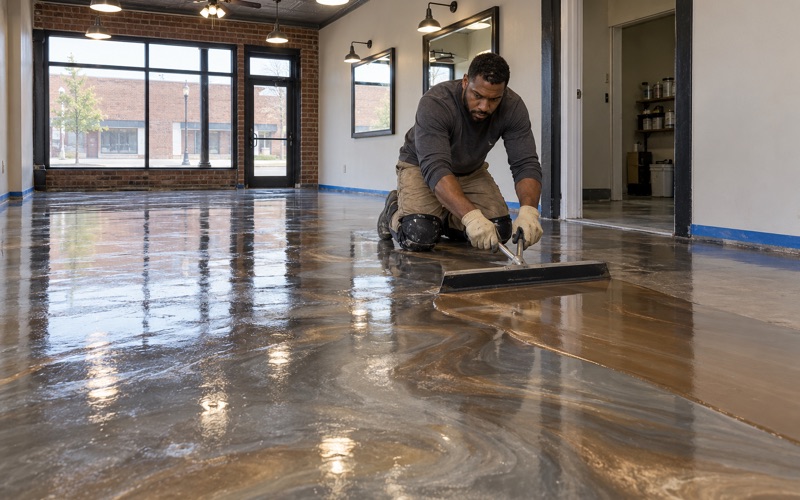
What resin does well is resist the shop fluids that soak into bare concrete. A properly built 100% solids epoxy base with a chemical-resistant topcoat sheds motor oil, diesel and gasoline, wipes clean, and keeps a stain from becoming permanent. That is a maintenance benefit, and it is the right reason to coat a tow garage.
Slip resistance comes from the broadcast and topcoat we specify, such as a quartz aggregate in the final coat, rather than from a promise. In a bay where fluids end up on the floor, that texture matters more than gloss.
What a Coated Tow Garage Is For, and What to Watch on It
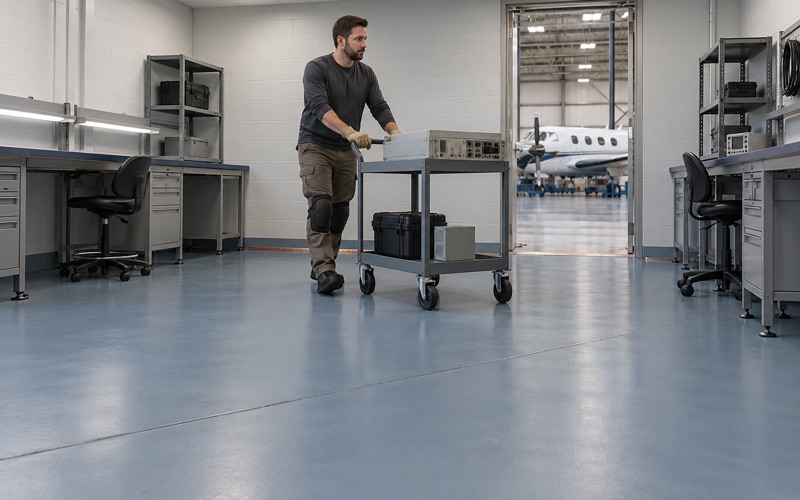
A coated garage at a towing business makes sense for undamaged vehicles, customer cars waiting on paperwork, and the repair and maintenance work done on the fleet itself. Flatbeds and rotators are heavy, so the system has to be built for wheel loads and for the grit tracked in from recovery scenes, not just for appearance.
An indoor impound area adds another reason to keep the floor easy to read. Vehicles can sit for days or weeks before an owner retrieves them, and a floor that shows which car has started to drip makes it easier to put a pan or absorbent under the right one.
A light, seamless floor shows a leak early
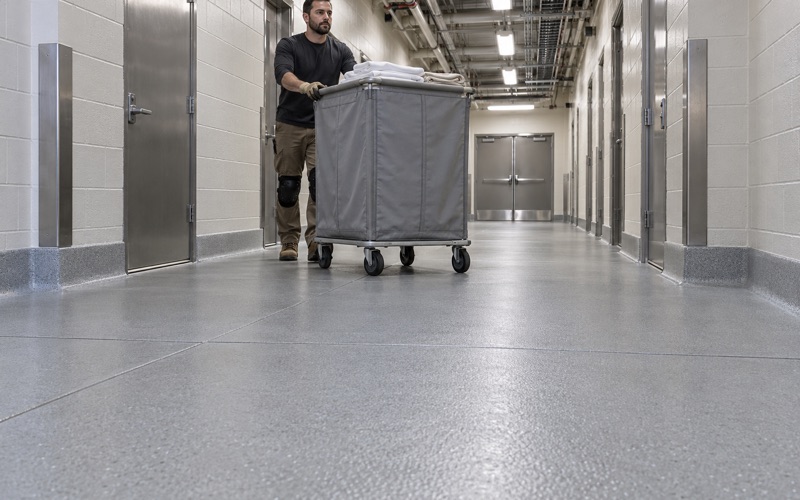
Leaking fluids are first on NHTSA’s list of warning signs, and on dark, stained concrete a fresh puddle is easy to miss. A light gray or tan coated floor, where a spill sits on the surface instead of soaking in, makes a drip under any vehicle visible from the doorway.
That visibility is useful on any vehicle, not just an EV. A coolant, transmission or fuel leak spotted on a pale floor gets traced while it is small, and if something looks wrong around a high-voltage battery, the answer is to get people clear and call 911, not to mop.
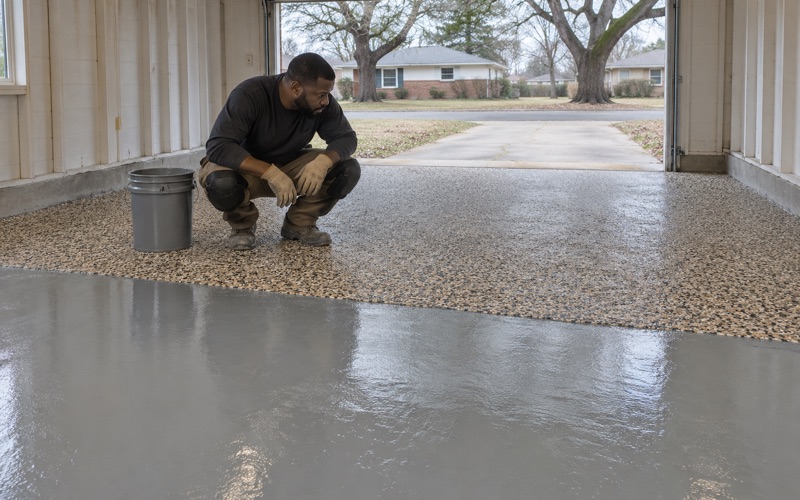
That is also why we steer a tow garage away from a dense vinyl flake broadcast. Flake hides dirt well, which is its selling point in a home garage, but in a shop it hides the small dark spot you were hoping to see.
How we build the floor itself
On a working bay we capture grinding dust at the machine with a vacuum rather than rinsing it toward a floor drain, and we phase the work so part of the garage stays open. The proposal names the product line, the number of coats and the finished thickness, so the owner can check the floor against the quote.
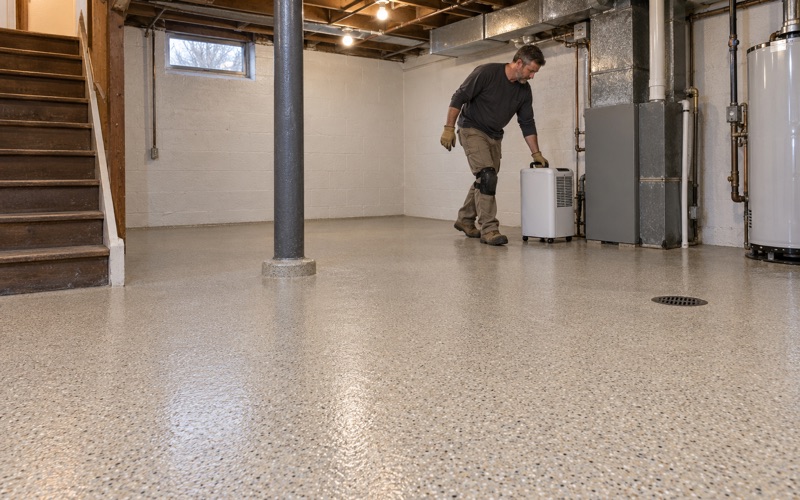
Moisture comes next. Most of Summit lies in the Des Plaines River floodplain, and a slab that pushes vapor up can lift a coating no matter how well it was ground, so a calcium chloride test under ASTM F1869 or relative humidity probes under ASTM F2170 set the number the slab has to pass.
A Crash-Damaged EV or Hybrid in a Summit Home Garage
The same reasoning reaches residential garages. Summit counted 11,161 people at the 2020 census, most of its housing predates 1960, and on an older residential block a garage is rarely 50 feet from a house, a fence or the next garage. A crash-damaged EV towed home and pushed inside is the situation the guidance was written to avoid.
None of this is a reason to worry about an EV that is simply parked. An undamaged EV on a coated floor is an ordinary car in an ordinary garage, and the guidance speaks to vehicles whose battery has been severely damaged.
Before it comes indoors
If your EV or hybrid has been in a serious crash, leave it outside where it is clear of the house, other cars and anything that burns until the insurer, the repair shop or the towing company has assessed it. If you notice leaking fluid, smoke, popping or hissing from the battery area, call 911.
Our part starts after that, with an undamaged car and an ordinary garage floor. A coating will make the floor easier to clean and drips easier to spot, and that is what we sell it for.
Winter, salt and an unheated garage
A detached garage is often unheated, and resin cures by slab temperature and dew point, not by the date on the calendar. In deep winter we tell owners to wait rather than lay a coating on cold concrete that will not cure properly.
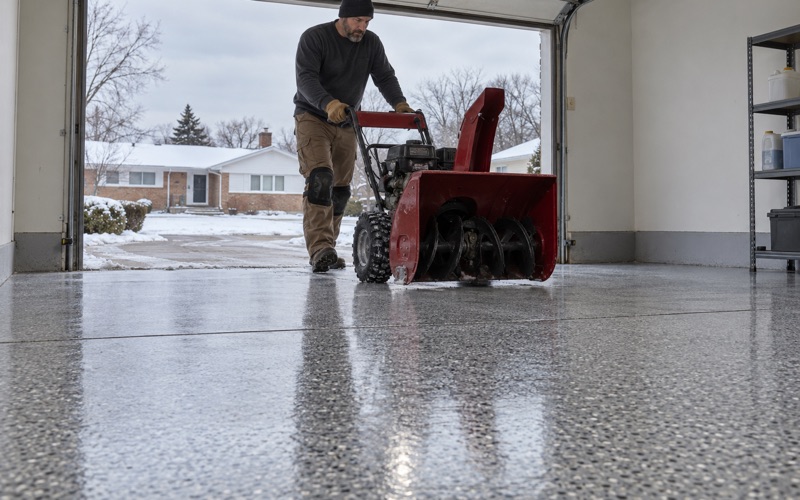
The system we choose for a home garage is built to stand up to the rock salt and brine that ride in on tires every winter, with a topcoat that resists hot tire pickup. For a family that now parks an EV where it charges, that durability is the real benefit.
Summit took its name from the highest point on the Chicago Portage, between the Chicago River and the Des Plaines River. A tow operator’s yard works on a similar divide: damaged batteries go one way, outdoors and at a distance, and everything a floor can actually help with goes the other, into a coated bay we can build.
- 20+ Years Coating Concrete
- Written Moisture Testing
- Free Estimates